Friday, April 27, 2007

Modest Mouse - We Were Dead Before the Ship Even Sank

Oftentimes I think the music world at large is getting into a rut. Thankfully, at this most recent time, along came Modest Mouse to show me that not everything is just the same old boring filler. They renewed my knowledge that music can be daring, original, and boundary-pushing.

A little-known band since 1996, Modest Mouse finally broke out big-time with their 2004 smash Good News for People Who Love Bad News. After that, critics everywhere were anticipating their next effort on the edge of their seats. But part of what made them get so excited by Good News was that it was quirky, off-beat, and deliciously indie. Modest Mouse was commendably ignoring the fact that they had been on a major label since 2000. Actually, I’m surprised that a major label stuck with them for as long as they did. Having your first album with them be a flop, and then taking three years to make another one, is usually a recipe for getting you unceremoniously dumped. I guess it was luck that they weren’t.

The record label’s patience (as well as that of the audience) paid off, however, since they matured into one of the tightest bands of the new century. They caught the attention of the Smiths’ Johnny Marr, who became a full-fledged member of the band for 2007’s We Were Dead Before the Ship Even Sank. Here the band straddles the line between mass-market sensation and quirky indie act. And amazingly, they do an astounding job. Record companies seem to have caught on that when they acquire an indie act like Modest Mouse (or the Decemberists), they shouldn’t clutch at them with dollar signs in their eyes. If they just leave well enough alone and let the bands keep their originality and artistry intact, the dollars will just come. After all, The Crane Wife was one of the most successful albums of the year. I imagine Epic is hoping We Were Dead will follow in its money-making footsteps.

Indeed, Modest Mouse’s off-kilter-ness is intact from the very first note, which is produced by an accordion, of all things (no longer uncool, thanks to Arcade Fire). The biggest stumbling block for me is Isaac Brock’s voice. It turned me off initially when I first heard Modest Mouse back in 2005. For certain songs, he seems to be going for an insane Cookie Monster growl, and it’s pretty distracting. I just had to give it time, though. “March Into the Sea” has Brock’s weirdness cranked to 11, and it’s actually a very off-putting way to kick off the album. But that just seems to be the Modest Mouse way. It took a few listens for this song to actually grow on me, as it did for the entire album. “Dashboard” follows as the catchiest and bounciest song Modest Mouse has ever done. This song had me nodding my head and singing along very quickly, the mark of a pop gem. “Parting of the Sensory” has a great apocalyptic and troublesome vibe to it, such that you really get into it. Brock’s lyrics remain inscrutable, being more like free-verse poetry in places. Johnny Marr shows his influence on “Missed the Boat,” which is nicely polished and melodic. In the face of the daring (and messy) originality of the rest of the album, some would say this track doesn’t fit in, but it’s actually one of the most accessible songs here, while still retaining the aforementioned originality.

“Fly Trapped In a Jar” falls off the tightrope into a sea of confusion, “Education” is a bit boring, and “Steam Engenious” doesn’t have a compelling melody. Other than that, though, the whole album successfully walks a fine line between originality and accessibility. It’s just catchy enough to draw you in, but just strange enough to make you stick with it. I think we can expect more acts like Modest Mouse finding mass appeal, since people seem to be expecting more and more from their music.

Prime Cuts:
Dashboard
Invisible
Missed the Boat
Parting of the Sensory

22 Rating: 12

Thursday, April 12, 2007

The Fray - How to Save a Life

I’m sure the members of The Fray are very nice people. They probably love their mothers, love their wives, don’t run stop signs, don’t cheat on their taxes, and never leave the toilet seat up. But there’s one area where they’ve committed a very heinous sin: they make music that’s ordinary. Music is an art form, and it should always stir in us some emotion, be it positive or negative. With How to Save a Life, the debut album from The Fray, it may as well not be there at all.

The Fray are basically exactly like Counting Crows (without the passion), or Matchbox Twenty (without the pop sensibilities), or Coldplay (without the British-ness). They don’t distinguish themselves from the huddled masses of piano-and-guitar soft rock bands at all. Actually, that’s not true. What makes The Fray different from the previously mentioned bands is that The Fray play with absolutely zero conviction. In all fairness, How to Save a Life makes no huge mistakes, but that’s because it takes no risks. Every song plays exactly the same, even having a similar structure and runtime. Nine of the twelve tracks are within 40 seconds of each other in time, all in the four minute range. The album gives new meaning to the word “safe.”

Things start off well enough with “She Is,” but that’s just because it’s the very beginning, and we don’t have a “rest of the album” to make it sound like it’s the same as everything that came before. The lyrics apply 6th-grade workmanship in “she is everything I need that I never knew I wanted / she is everything I want that I never knew I needed.” “Over My Head (Cable Car)” is the first big single, and with good reason, because the lyrics are the sharpest and most telling of the whole album. However, the song suffers from a lack of catchiness and Isaac Slade’s terrible voice. “How to Save a Life,” the second single, has all the bad points of “Cable Car” and none of the good. And from there, it’s just all the same, as if it were performed by robots.

“All at Once” is of a slightly higher level that the rest, almost on par with Counting Crows. “Little House” is the closest thing to true rock and roll, but that’s sadly far from the mark. And the rest of the album is just boring, standard, uninspired, achingly ordinary, and ultimately forgettable. Well, it would be forgettable if radio stations weren’t playing so much of “Cable Car.” The song’s even been adopted by a few television gurus. I could see Dawson’s Creek making The Fray very big, if that show was still on. Hopefully, though, one of two things will happen. Either The Fray will grow some originality, or they’ll soon fade away into the night. Whatever road they take, I have a hard time caring.

Prime Cuts:
All At Once

22 Rating: -1

Sunday, April 01, 2007

Fall Out Boy - Infinity On High


I can kinda-sorta sympathize with Fall Out Boy. After all, they were rather suddenly thrust into the spotlight. But honestly, if they didn’t want that to happen, or even didn’t think it ever would happen, what were they doing this whole rock and roll thing for anyway?

To their credit, Fall Out Boy is incredibly self-aware, and constantly keep themselves in check. No one laughs at themselves more than Fall Out Boy. They lampoon themselves at every opportunity, not the least of which is the video for “This Ain’t a Scene, It’s an Arms Race.” The whole thing is a ribbing of all things FOB, some things that only avid fans or people who pay very close attention would know about. But at the same time, they seem to be giving themselves things to make fun of. That is illustrated no more than on their new album, Infinity On High.

It starts of with rapper Jay-Z (yes, Jay-Z) doing a shout-out, just like a rap album. This set off dozens of alarm bells in my head. The track that follows it, “Thriller,” is a very poppy slice of punk rock, so much so that it almost made me sick. Like a lot of tracks on Infinity On High, I like it, but I don’t like that I like it, if that makes any sense. It’s polished to a high mirror shine, even as the lyrics of the album seem to be rejecting that.

Next comes “The Take Over, the Break’s Over,” which perpetuates the “shiny garbage” modicum. However, they come right back with their new “Sugar, We’re Going Down” with “This Ain’t a Scene, It’s an Arms Race.” This song illustrates everything I love about FOB; strong, catchy and punchy. Pete Wentz lyrics are so clever that he might break his arm he’s patting himself on the back so hard. He’s got to be pretty proud of his song titles, too. They dangerously dance back and forth on the line of ingenious and incredibly annoying. “You’re Crashing But You’re No Wave.” “I’m Like a Lawyer With the Way I’m Always Trying to Get You Off.” “I’ve Got All This Ringing In My Ears and None On My Fingers.” Riiiiiiiiiiiiight. This is only trumped by the lead-off track of their previous album, “Our Lawyers Made Us Change the Name of This Song So We Wouldn’t Get Sued.” Song titles like that make me smile and shake my head, make me laugh and cry at the same exact time.

Songs that they experiment on (where they play against type) generally don’t work. Their forays into the pop and hip-hop worlds are ill-conceived, but interesting nonetheless. It’s when they stick to their modern rock roots that they really shine. “Hum Hallelujah” is a pretty good punk song, though the rip-off of Rufus Wainright’s “Hallelujah” is a little over the top. In the context of the entire album, tracks like “The Carpel Tunnel of Love” and “I’ve Got All This Ringing…” seem like filler and hold-overs from the last album, but they’re some of the best on here.

Infinity On High is even more smarmy and self-aware than From Under the Cork Tree, and if you like Fall Out Boy at all, I think you’ll like this, or at least appreciate it. But I find that people generally fall into one of two groups when it comes to FOB: love ‘em or hate ‘em. So if you’re in the second group, stay far away from this album, because it will only piss you off. But if you’re under 17 and in the “no one understands me” phase, then by golly this is the album for you.

Prime Cuts:
This Ain’t a Scene, It’s an Arms Race
You’re Crashing But You’re No Wave
Hum Hallelujah
I’ve Got All This Ringing In My Ears and None On My Fingers

22 Rating: 6

Thursday, March 15, 2007

Arcade Fire - Neon Bible


Arcade Fire’s new album wasn’t met with quite as much fanfare as I expected, them being “Canada’s hottest band” and all. And if you want my personal opinion (which you do, or you wouldn’t be reading this blog…), they didn’t get even an iota of the fanfare they deserved. Funeral was blazingly awesome, and it’s a pretty tough act to follow. Being cognizant of this, I would say my expectations for Neon Bible were fairly reasonable. Fortunately for Arcade Fire, my expectations were met and then some.

Funeral was the work of a band in turmoil, in the midst of personal tragedy. It made for an album that was, above all, passionate. Passion is a little dangerous, though, because it generally doesn’t concern itself with neatness or efficiency, and tends to make a mess. Funeral’s mess was very beautiful, though, and the band’s pain was palpable on the record. With Neon Bible, however, Arcade Fire wisely doesn’t try to duplicate that oeuvre. Instead, they take a more measured and careful approach, and it pays off. The music is still odd, and sometimes comes out of left field, but instead of just taking a scattershot approach, like on Funeral, they opt for steady shots with a steady hand.

Normally, that approach makes for a pretty stale record, especially for a band whose hallmark is beauty that is untamed. But amazingly, Arcade Fire make all the right choices, with the timeless beauty remaining intact with a very different approach. “Black Mirror” makes known that Neon Bible is not only a subtler album than Funeral, but a darker one, too. The immediacy of “Wake Up” and “Power Out” are generally gone, but in their place is a strong impassivity. “Black Mirror” is a good opening track, though not quite as strong as the second track, “Keep the Car Running.” It has very catchy verses, and is a shoe-in for a single. As on the last album, Win Butler’s voice is clumsy as not technically proficient at all, but it suits the material. “Intervention” continues the theme of featuring strange instruments, as a pipe organ plays the lead part. I again am struck by Arcade Fire’s uncanny ability to make the weird sound beautiful, eliciting a reaction of wonder rather than discomfort. The best track, “Ocean of Noise,” highlights the measured approach that the whole album takes, as it has a very subtle, Death Cab-like undertone to it.

On “(Antichrist Television Blues),” Win Butler seems to be channeling Bruce Springsteen, both in the musical style and the vocal quality. Near the end, Arcade Fire reworks a song from early in their career, “No Cars Go.” It’s slightly obvious that this song represents a younger band, as it’s a little nervier and more excited than the rest of the album, and doesn’t quite fit the general tone of it. However, I’m glad they finally put this great song on an album, so it can enjoy mass consumption. “My Body is a Cage” takes a little while to really get going, but eventually crescendos to a point that nearly equals the closing power and emotional punch of “In the Backseat.” It also leaves you hanging at the end, awaiting the third album.

A lot of great bands suffer from the sophomore slump, but Arcade Fire just laughs in that concept’s face. Neon Bible isn’t as emotionally affecting as Funeral, but it seems incorrect to compare the two, since they have pretty different tones. Really, they represent two points on this band’s journey, and hopefully, it will be a long journey indeed.

Prime Cuts:
Ocean
of Noise

Keep the Car Running
Intervention
My Body is a Cage

22 Rating: 12

Friday, February 16, 2007

Nine Inch Nails - The Fragile

Did this really need to be a double album? I mean, seriously, Trent, the fact that you have so much art coming out of you (rather like puss from an open sore…) is great, it really is. But have you ever heard of the philosophy “less is more?” Wouldn’t it have been better to keep it concise, and in the process save your listeners a little money?

Double albums are a little bit tricky, because you need to do several things with them. First off, you need to make sure that you have enough to say to actually fill two album-lengths. Secondly, what you have to say better be pretty freaking important. Thirdly, you have to keep your listener’s attention through the entire 90 to 120 minutes of the proceedings. Bands usually do this by switching it up a lot, like on those two masterpieces, Mellon Collie & the Infinite Sadness and The White Album. Other times, they do it by having an honest-to-God story, like on Tommy and The Lamb Lies Down On Broadway.

Nine Inch Nails’ The Fragile falls just short on the first two things, but remarkably succeeds at the third, but not in either of the previously mentioned ways. No, The Fragile holds your attention by being so gosh-darned interesting that you can’t look away for long. I don’t think, however, that that feature makes it worthy of being a double album. It could have been every ounce as interesting if it had been an ordinary, 55-minute, single-disc album. Not only does The Fragile not have enough to say, it doesn’t even say anything new. Reznor basically covered the area of “my life sucks” ad nauseum with his first three albums. Like I said in my review of With Teeth, the main reason The Fragile was such a disappointment over The Downward Spiral was my age. I was 14 when The Downward Spiral came out, and 18 for The Fragile. That four years made a world of difference. I had grown up in the intervening time, and at a much faster rate, apparently, than Reznor. He was still stuck in the “oh woe is me” stage, though he had gotten a little subtler and smarter about it. The one leap forward he made, however, was that he no longer saw suicide as cool or romantic, as he said in interviews.

When you zoom out and look at The Fragile as a whole, you see that it’s a pretty ambitious effort that really pays off in its own weird way. It’s when you look too closely at individual moments that it starts to break down. But it’s a double album, so it has enough absolutely great moments to balance out the ho-hum and bleh ones. It takes quite a bit of effort (not to mention a sizable time commitment) to get much out of it, though. There’s really no sense in highlighting individual songs, since most of them have the same emotional color. The dirgy crunch and cold industrialism of this type of music is surprisingly aided by this album’s increased use of guitars and other stringed instruments. Trent Reznor has said that stringed instruments are imperfect, unlike computers, which will execute what you tell them to without error. That element fell exactly in line with what he was trying to accomplish with this album, and Reznor really has some intriguing sounds on it. Taken as a whole, The Fragile is a very good addition to NIN’s discography, even if it’s really long-winded and not very lyrically original. But to really enjoy it, you can’t think too hard about it. Trent wins points for expanding the definition of “music” a little, but loses a lot of them for not knowing what to keep and what to discard.

Prime Cuts:
Into the Void
The Wretched
Where is Everybody?
We’re In This Together
Just Like You Imagined

22 Rating: 7

(Incidentally, today is the first birthday of Drop 22!)

Saturday, February 03, 2007

Jet - Shine On

It does this old soul some good to see an old-fashioned rock n’ roll band out there, especially when so many bands nowadays are rock bands plus something else. Don’t get me wrong; I like all the frills and complications that modern groups bring to the table, or at least most of them. But it’s also good to get back to basics every once in a while, and that’s exactly what Jet does with their sophomore album, Shine On.

It doesn’t get off to a great start, though. The opening track, which is just 23 seconds long, is also the first 23 seconds of the closing track, lifted precisely from it. I don’t see why it’s necessary. The first real song, “Holiday,” sets the tone for most of the rest of the album, which is simple, gritty, and down-home rock and roll. Unfortunately, “Holiday” has kind of a clunky chorus, and is not powerful enough to be a good opening track. The next one, “Put Your Money Where Your Mouth Is,” more than makes up for it, however. In my opinion, the album really starts here. This is a blazing rock song with an awesome groove and vocals done with utter conviction. When it’s over, you want to hit repeat and play it again. Things follow in the same pattern until “Kings Horses,” which is a softer side of the band, but not very memorable.

Then we have “Shine On” at the mid-point of the album. This song combines a good melody with soulful delivery, and one can tell that a lot of emotion and feeling went into the recording. Nic Cester wrote this song from his father’s point of view after he had passed away, as a sort of message to all those that he left behind. It’s a beautiful sentiment, but the sentimentality of it doesn’t diminish the band’s muscle or machismo.

“Come On Come On” and “Stand Up” are good Stones-esque rockers, and “Eleanor” is a sweet ballad that has very strong echoes of the Beatles. Indeed, those same echoes are present throughout the album. I’m struck by how similar Jet is to Oasis, another band that idolizes the Beatles. They both have brothers in them, one of which is the lead singer. The first single from this album is called “Put Your Money Where Your Mouth Is,” and Oasis had a song on Standing On the Shoulder of Giants called “Put Yer Money Where Yer Mouth Is,” that had generally the same tone to it. Also, “Shine On” seems to be an amped up and just plain better version of the recent Oasis song “Let There Be Love.” The big difference is that Jet represents Australia, and Oasis is so British it hurts. Their similarity is noted by the bands, as well, as they toured together a few years ago.

While Shine On is a good slice of simplicity in a not-so-simple rock music world, it has its problems. For one thing, it’s a bit too long. I think the album could have benefited from shortening a few of the songs, cutting some songs out, or both. Much of it seems like filler, and that’s not necessary. With a band like Jet, where rock and roll is a very down-to-earth, accessible thing, the wiser choice would be to keep it short and sweet. Still, though, Shine On is a breath of fresh air, and an album I will retreat to when things get too complicated.

Prime Cuts:
Put Your Money Where Your Mouth Is
Shine On
Come On Come On
Eleanor

22 Rating: 8

Friday, January 26, 2007

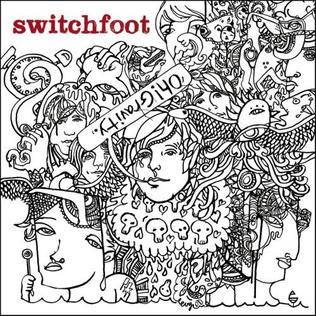
Switchfoot - Oh! Gravity.

I was at my friend Andy’s house, and I just happened to notice that he had Switchfoot’s new album, Oh! Gravity. just as I was leaving. He said, “You wanna borrow it? It’s really bad.” I thought sure, Andy. Switchfoot couldn’t possibly be bad. All their other albums were at least passable, so they couldn’t possibly make a switch that was so dramatic. So what’s the worst that could happen? How wrong I was…

My first thought after listening to it for the first time was that it would be awesome if we had a time machine, so we could go back to before this record came out and either convince the members of Switchfoot that putting this record out was a bad idea, or kill them. Kinda savage, I know, but if that’s the price we have to pay to have this horror NOT unleashed on the world, then so be it. That was just a visceral reaction, and obviously my hatred of this album has lessened some. It is not, however, enough to keep me from anti-recommending this abortion with extreme prejudice.

From the very first second of the record, Switchfoot takes a wrong step. The song “Oh! Gravity.” sounds like a throwback to the worst part of the 80s, the part with wild hairstyles and spandex pants. The title is horrible for the song, let alone naming the album after it. After that comes “American Dream,” one of the only listenable tracks on the album. I kind of appreciate the disillusionment he expresses on this and “Circles,” but it’s getting a little old, as that was the central idea behind Nothing is Sound. “Dirty Second Hands” has a discombobulating and inconsistent groove to it, and while it does kind of intrigue me, it’s just too sloppy to be worth it. “Awakening” harkens back to the days of Learning to Breathe and The Beautiful Letdown, and the respite is welcome. And “Head Over Heels” has a mournful aspect to it that is kind of nice, even if Jon Foreman shouts where he should whisper.

I haven’t touched on the incredible ineptitude and presumption that the album displays, however. My first example is “Amateur Lovers.” First off, this song is an attempt at a carbon copy of the Nothing is Sound track “Easier Than Love,” which is a horrible enterprise at the very start. “Easier Than Love” smartly took an abstract and personified it, and that leaves “Amateur Lovers” with nowhere to go. Jon Foreman must have been trying to make up for the lack of ideas by upping the intensity of the song, but he sounds like an over-excited tuberculosis patient when he does that. I don’t understand the shift towards gruff intensity that Switchfoot has taken in their last few albums, since they do subtle beauty so much better. This song is horrible, and I’m surprised that Switchfoot thought we were stupid enough to fall for it.

My second example is “Faust, Midas, and Myself.” This song has problems up the Yangtze, from tune (unmemorable) to rhythm (grating) to lyrics (shut up, just shut up) to variety of sound (it has none). The lyrics represent Foreman’s tendency towards very cerebral and philosophical songwriting gone awry. The song has an absolutely wretched title (that makes two), and the music is wrong-headed and infantile. My third example is “4:12.” When I saw the title of this on the back sleeve, I thought it was a reference to a Bible verse, and some warning bells went off in my head. Switchfoot’s Christianity has always been very subtle, and that’s one of the few areas where they haven’t taken a misstep. I was wrong in my original guess, and it’s not about a Bible verse; the sin of this song is much, much worse. 4:12” is a reference to the time on a digital clock, as in four hours and twelve minutes. That in and of itself is fine, but the track clocks in at exactly four minutes and twelve seconds. Switchfoot is basically saying, “Aren’t we clever? We are; we’re so clever. We deserve a pat on the back; several, actually. I’m sure our audience thinks we’re really clever, too. I’m sure they don’t hate us for thinking they’re of sub-standard intelligence.” Not buying it, guys.

I better wrap up this review before I get too angry. When the anger fades, however, there will only remain disappointment that Switchfoot has hit their first low. It’s one of inept musicality, and worse, derision towards the audience.

Prime Cuts:
American Dream

22 Rating: -15