Thursday, December 07, 2006

OK Go - Oh No

OK Go start playing, and I can’t help but be waiting for the catch. It seems too simple, too basic, too good to be true. Here we have a rock band that plays rock, and there’s nothing else. One part of me says “At last, a band with no agenda or plan!” But another part says, “That’s it?”

And indeed, that’s it. I’ll admit that rock and roll has become pretty cumbersome lately, with the likes of Coheed & Cambria and Green Day making high-concept metal and rock, almost qualifying as art. Then you have bands like the Killers, making rock that takes itself very seriously. That’s all well and good, but you need a little fun to balance all that out. OK Go provide the no-strings-attached jubilation necessary to create a break from the ponderous (but still good) rock music that has become all too common these days; the problem is that it passes away so quickly. It’s nice while it lasts, but that’s not very long.

OK Go bears a striking resemblance to the Cars, and their second album, Oh No, has a lot in common with that band’s pop niceties. Oh No is a very pop album, from the high-octave backing vocals to the pastel shirts of the band. The biggest example, however, is in the band’s video for the big single off this album, “Here It Goes Again.” At the base of it, this video is not much; just a stationary camera with no special effects or CGI. It involves the members of OK Go doing an elaborate dance on eight running treadmills, arranged in a 4x2 square, with alternating directions. It’s a little hard to explain, but unless you’ve been living under a rock for the past four months, you’ve already seen this video. It got released on YouTube the day before it premiered, with an insane number of people viewing it the very first day. The dance created such a buzz that many people don’t know that it’s actually the band doing the dance, or even that it’s a music video at all. The dance itself is pretty amazing, and it reminds me of the Mentos and coke thing that some people did, synchronizing the coke explosions to music. If that’s not a pop phenomenon, I don’t know what is.

Oh No begins on a pretty tight and intense note with “Invincible,” a light-hearted superhero story with a dirty groove. Most of the rest of the album sticks pretty closely to that formula, with the deviations (“Let It Rain,” “Maybe This Time”) being kind of haphazard. OK Go is a pretty simple-minded band, and for the most part, they stick to what they have expertise in. It’s when they don’t that things start to fall apart. They don’t exhibit much in the way of originality, either. The guitars and vocals only have two tones (loud and quiet), and the two aren’t really all that different from each other. Like any album of such a specific color, it starts to unravel toward the end. “A Good Idea at the Time” and “The House Wins” are fun and bouncy anthems, but other tracks, like “Television, Television” and “Do What You Want” have a lot of intensity but not much grace, tunefulness, or even pop appeal.

This is only OK Go’s second album, but they should have learned a few tricks of the trade by now. They can’t be expected to be fall-down awesome like the Smashing Pumpkins and the Decemberists were at this juncture in their career, but they are expected to at least progress a little. All in all, Oh No isn’t groundbreaking or world-changing, but it does make you snap your fingers and nod your head a little. There just wasn’t anything to make it very memorable.

Prime Cuts:
Here It Goes Again
Invincible
The House Wins

22 Rating: 3

Friday, December 01, 2006

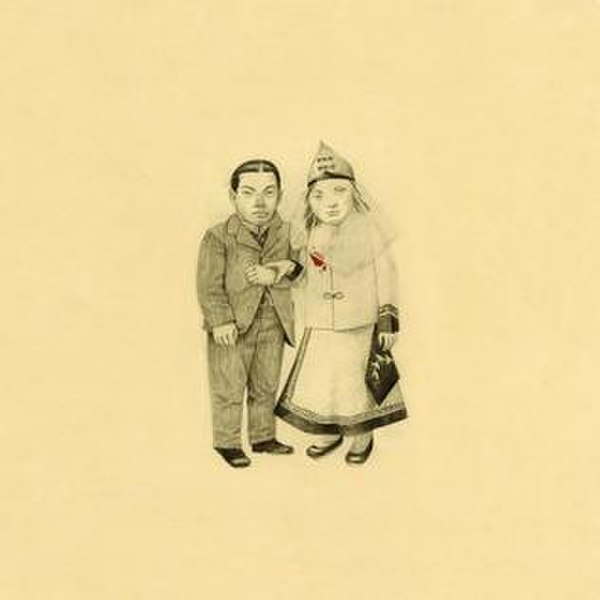
Death Cab for Cutie - Plans

Transatlanticism left me begging for Ben Gibbard to let his inner rock star out. 2 years from the release of that album, he seems to have taken my advice and done the opposite. Gibbard and crew have made one of the prettiest, most touching, and emotionally affecting albums in a long time… so why do I feel like I’ve been cheated out of something?

Basically, Plans is the work of a man who is really not all that ambitious. I can understand that, since I’m not all that ambitious either. But every single track on Plans makes me think that Death Cab for Cutie could have done so much more. I realize that Death Cab got a lot of media attention super-quickly because of Transatlanticism, and all that pressure can cause some people to withdraw. I think that’s what happened with Plans. There was so much hype surrounding it that Death Cab purposefully made it underwhelming, as if to say “We’ll make whatever album we want to make, and we won’t be swayed by the likes of you.” You gotta respect that.

Chris Walla is a masterful producer, I must say. His style is very understated, subtracting elements rather than adding them, and that suits Death Cab for Cutie very well. Sometimes he goes as far as to have just Ben and an acoustic guitar, as on “I Will Follow You Into the Dark.” Plans is a very quiet album, and Death Cab doesn’t grasp for anything throughout the entire proceedings. The problem is not that it doesn’t shoot for the moon, but that it doesn’t even shoot for the tops of the trees. It’s pretty, but it doesn’t challenge or captivate us the way some of their previous albums did.

The bouncy fun of “I Was a Kaleidoscope” and “Death of an Interior Decorator” is only present on one song (“Crooked Teeth”), as the dark intensity of “We Looked Like Giants” only shows up on “Someday You Will Be Loved.” “Crooked Teeth,” while the big single, doesn’t have the mark of lyrical excellence that we’ve come to expect from Gibbard. It’s a little like those two songs were only included as hold-overs so Ben could get back to the ponderous beauty of the rest of the album. There is beauty, but it’s a schmaltzy beauty, and even a cheap beauty in places. I’d rather Death Cab didn’t try for beauty at all if it’s going to be cheap. The exception is “What Sarah Said,” which is marvelous. Here, all the elements come together in exactly the right way to create a song that is filled to the brim with pain, sadness, and unbelievable beauty. It represents a moment where the protagonist’s understanding shifts to a higher level, one that can only be reached when you have a brush with death, be it your own or that of someone you love.

Speaking of death, there seems to be a lot of it on Plans. However, that’s a point of credit to the album, because it’s evident that Gibbard has an understanding of death that not a lot of other artists have. I myself have been very close to death, so that resonates with me in a very special way. Gibbard has said in interviews that Death Cab for Cutie’s other albums have been about looking back in sadness, but that Plans was much more optimistic. After all, to make plans, you have to have something to look forward to. It is optimistic, but it’s odd that an album that is so optimistic would be so concerned with death. The album is nice, but it feels incomplete, and I feel like I only got half the story. With the exception of “What Sarah Said,” the whole thing feels kind of like a joke you don’t really get, but laugh at anyway. Your joke has a good build-up, Ben. I just hope that with the next album, you give us the punch-line.

Prime Cuts:
What Sarah Said
Soul Meets Body
I Will Follow You Into the Dark
Brother On a Hotel Bed

22 Rating: 9

(Just for the record, Transatlanticism has increased in my estimation from a 10 to a 13.)

Thursday, November 30, 2006

Same great product, brand new packaging!!!

Just to let you all know, I will be posting under my main identity, which is Particle Man. Don't be alarmed when the reviews don't come from Gamgee anymore; it's still the same person.

Monday, November 06, 2006

National Novel Writers Month

November is National Novel Writers Month, or NaNoWriMo. All that is required is a quick sign-up on the website (www.nanowrimo.org) and you're good to go. Just write 50,000 words by the end of November, and you win! I will be participating, and thus will be concentrating on my novel, and not writing album reviews for the month of November. But not to fret, I will be back with some great reviews of Death Cab for Cutie's "Plans" and Metallica's "Master of Puppets" in December! Check back with me then, for I will be ready to review like never before. Wish me luck with my novelizing!

Friday, October 27, 2006

Evanescence - The Open Door

My dad likes to plan vacations and never take them. He plans every single detail of a vacation, has every minute down on a specific schedule, but then never actually does the things he planned. Don’t get the idea that he doesn’t follow through with things; that’s definitely not true. No, he does it on purpose. He never has any intention of going on these trips. He likes the planning. He gets so much more excited over the build-up to a trip than the actual trip, that he figures he can plan vacations and never take them. It’s a good plan, actually. The excitement beforehand is what he enjoys, not the actual event. With the release of The Open Door, and the entire hubbub beforehand, I finally understand what he means.

I cannot express enough how absolutely great an album Fallen was. Evanescence was a fresh face that breathed new life into the dismal world of goth rock. So naturally, the excitement for their next album was very high. I remember that for about three months beforehand, ever since “Call Me When You’re Sober” came out, I was so elated that the wait for a new Evanescence album was finally going to come to an end. And once it did, I sorta wanted to go back to those days.

Ben Moody has made a hasty exit, and with him went a lot of catchiness and pop sensibilities, I’m sad to say. The Open Door is really Amy Lee’s definitive work, and it sounds like a woman carving out her place in a man’s world, and that’s totally cool. Moody leaving the band was the best thing for the band on an interpersonal level, as Lee’s and Moody’s personalities had just grown too far apart. However, with Moody went a piece of what made Evanescence them. It’s just sad that Lee’s personal journey is better without Moody, but her musical capacity seems incomplete.

I’m making it sound like The Open Door is a terrible album when it’s not; it’s actually pretty good. It’s just that Fallen was so singularly awesome. When they’re compared to each other, which is not only unavoidable but appropriate, The Open Door comes up wicked short. “Sweet Sacrifice” opens the album on an intense but tuneless note. It’s clear that the beautiful creepiness Fallen had is still intact, and Evanescence still has that perfect mixture of the hard and soft. “Call Me When You’re Sober,” let’s be honest, could be better. I still like it, and it really is the best choice for a first single. But Amy Lee’s liberating honesty is great for her, but not doing a whole lot for her audience. “Weight of the World” and “Cloud Nine” have great guitar and keyboard parts, and the band really comes together as a unit on these two songs. On other parts of the album, though, it really seems like the Amy Lee Show. “Lithium,” the next single, is impassioned and heartfelt, but sadly has a lack of hooks. A lot of songs on the album are like that, actually. The intentions behind them are good, but they don’t quite do it. There is simply nothing on the album as poignantly heavy as “Everybody’s Fool,” as hauntingly beautiful as “Hello,” or as deliciously unsettling as “Haunted.”

Like I said, The Open Door is a good album, but a very disappointing one. The only reason it’s disappointing is that Fallen was so spectacular. It’s a case of the sophomore slump, pure and simple. So the next album will really make or break the deal. Typically, when the sophomore slump plays out, the third album is either stellar or even more disappointing. We’ll see which road Evanescence takes.

Prime Cuts:
Cloud Nine
Call Me When You’re Sober
The Only One
Weight of the World

22 Rating: 9

Wednesday, October 18, 2006

Aerosmith - Pump

These days, we don’t have records like this. What constitutes a “record like this,” you ask? By that I mean three things; sex, drugs, and rock and roll. Actually, the drugs part has been excised for Aerosmith’s eighth studio album, Pump, and as Steven Tyler himself said, “that leaves more room for the other two.” Indeed, sex in all its forms (except, oddly, the totally pure kind that exists in a loving marriage) is the centerpiece of this album, and there is no shortage of rock and roll. That’s one of the languages of sex, after all, so it’s not surprising. Heck, even Anberlin sings about the complications involved with sex, and they’re a Christian band. Sooner or later, it all comes back to that subject. It is, after all, one of the basic human drives (or so it is purported by some).

Aerosmith take a tack with it, however, that is sadly not really used anymore, and that is being so freaking clever about it that you only realize the incredibly bawdy nature of what he’s saying when you stop for a second to think about it. “She’s got a new kind of jelly in her jelly roll.” Innocent seeming, but when applied in a certain way, really gross. In a strange way, I long for the days when music artists actually did this; couched their libidinous words in metaphor and twisting avenues. Nowadays, the rap and R&B artists just state it plain, and that makes for not only a somewhat disturbing musical experience, but an uninteresting one, as well.

Pump starts off on a very high note, one that’s in fact the highest of the entire album. “Young Lust” is a real stomper, and you can’t help but be swept away with its intensity and driving beat. “Young Lust” also starts a trend that continues for two more songs, which is an unabashed celebration of sex. “F.I.N.E.” and “Love In an Elevator” both are jubilant, happy songs about a very base and simple subject, but they work because of the (sometimes) roundabout route that they take. Remember, Aerosmith are just five working class guys with pretty down-to-earth desires: they want chicks. They’re not brooding, tortured, or pessimistic. They did a brand of rock music that isn’t really done anymore: swaggering around like you’re the sexiest thing God ever created, his gift to women. But here’s the funny thing, the thing that most bands today forget: when you really and truly believe you’re the sexiest guy in the room, you are. Aerosmith had no shortage of girlfriends, let me tell you. Some may try to deny it, but that’s the initial aim of playing rock music in the first place. It’s why I went to the girls’ lounge with my guitar my first week of college. To get chicks.

However, Aerosmith cover more ground that just makin’ with the love. “Monkey On My Back” shows how far they have come, being an indictment of the drug culture. They were all totally clean and drug-free for this album and every one after it, as well as Permanent Vacation before it. “Janie’s Got a Gun” makes a strong if somewhat simple-minded statement about child abuse, and “What It Takes” shows that Aerosmith still know how to write a sensitive and tender song about a heart done wrong. And all the while, even though they’re dealing with somewhat weighty subjects, they never stop delivering the blues-based rock and roll that they’re famous for. Steven Tyler really only knows how to sing one way, so it’s good that he sticks to what he does best.

I was 8 when Pump came out, but I didn’t discover it till I was 12. I had to hide it from my parents that I even listened to Aerosmith, and had some major hell to pay when they found out. And you know, Aerosmith still has the appeal that they did back then. They remind me of a time when rock stars picked out a girl from the audience and gave her a smile, and that was all they had to do to make her swoon. If only it were that easy.

Prime Cuts:
Young Lust
What It Takes
The Other Side
Love In an Elevator

22 Rating: 12

Friday, October 13, 2006

The Decemberists - The Crane Wife

Certain albums are classic. By that I mean they capture the essence of something that transcends music, so much so that the music becomes more than music; it becomes part of our very lives. These albums have an elevated sense of artistry, but also capture a moment in time and make it timeless. Nevermind was such an album. So were The Joshua Tree, Revolver, The Downward Spiral, Rumours, and Mellon Collie & the Infinite Sadness. Albums like that mark the time because they contain a kind of zeitgeist that endures the passing of the ages. The Crane Wife may just be another one of those albums.

The buzz surrounding The Crane Wife’s release was considerable, most of it being concern about the Decemberists moving to a major label. For three albums and four years, they had been the champions of the indie movement, being the crowning achievement and the most quality export of any minor label. But the natural progression is a band making a name for itself in indie land, and then climbing up the ladder to a major label, meaning more exposure and money. The problem is once an act makes the transition from small to big time, that major label forces them into the mold of public acceptance, something indie labels don’t do. So concern was voiced everywhere that that classic story would be the Decemberists’ story, too. Thankfully, everyone was wrong.

The Crane Wife is a glimpse of the Decemberists and frontman Colin Meloy at their most creative, their most ambitious, and their best. Right off the bat, this album captures a beauty not found in this day and age. With the 4-part epic “The Island,” they call upon the gods of progressive rock, like Pink Floyd, Yes, Genesis, Kansas, and even Jethro Tull. Even if they’re shamelessly indulging in the past, the lyrics still retain that Meloy-ness to them, something no one can duplicate. “Yankee Bayonet” has a guest spot from Laura Veirs, whom I had never heard of before. From the first second she came in, my ears pricked up. She has an incredibly unique voice, and it suits this song perfectly. “Shankill Butchers” is a bedside horror story, meant to scare kids into good behavior. “Don’t be naughty, children, or the Shankill Butchers will get ya!” The fact that a song like this exists at all is cause for celebration. “The Crane Wife 1 & 2,” along with its out-of-order companion piece “The Crane Wife 3,” draws upon an old Japanese folk tale of an act of kindness, giving the album a definition and sense of purpose that makes the strongest case for it being a classic album. And of course, the best is saved for last. “Sons and Daughters” brings it back to a place of beauty and timelessness. The final repeated phrase of “Here all the bombs fade away” is powerful but gentle at the same time. And the cymbal crashes and then the fade-out at the end only further illustrate the point.

I don’t know any other way to put it; this is the best album to come around in quite a long time. There isn’t a bad song on here, or even a ho-hum one. Each song is a splendid creation, but the album taken as a whole is really where it shines. It seriously could be one of those albums that fledgling bands hold up and say, “man, I wish we could be as good as that.” And it renews my faith in not just rock and roll, but music in general. When I listen to this album, I get the sense that it’s all going to be alright.

Prime Cuts:
Sons and Daughters
The Island
The Crane Wife 3
Shankill Butchers

22 Rating: 20