Friday, October 27, 2006

Evanescence - The Open Door

My dad likes to plan vacations and never take them. He plans every single detail of a vacation, has every minute down on a specific schedule, but then never actually does the things he planned. Don’t get the idea that he doesn’t follow through with things; that’s definitely not true. No, he does it on purpose. He never has any intention of going on these trips. He likes the planning. He gets so much more excited over the build-up to a trip than the actual trip, that he figures he can plan vacations and never take them. It’s a good plan, actually. The excitement beforehand is what he enjoys, not the actual event. With the release of The Open Door, and the entire hubbub beforehand, I finally understand what he means.

I cannot express enough how absolutely great an album Fallen was. Evanescence was a fresh face that breathed new life into the dismal world of goth rock. So naturally, the excitement for their next album was very high. I remember that for about three months beforehand, ever since “Call Me When You’re Sober” came out, I was so elated that the wait for a new Evanescence album was finally going to come to an end. And once it did, I sorta wanted to go back to those days.

Ben Moody has made a hasty exit, and with him went a lot of catchiness and pop sensibilities, I’m sad to say. The Open Door is really Amy Lee’s definitive work, and it sounds like a woman carving out her place in a man’s world, and that’s totally cool. Moody leaving the band was the best thing for the band on an interpersonal level, as Lee’s and Moody’s personalities had just grown too far apart. However, with Moody went a piece of what made Evanescence them. It’s just sad that Lee’s personal journey is better without Moody, but her musical capacity seems incomplete.

I’m making it sound like The Open Door is a terrible album when it’s not; it’s actually pretty good. It’s just that Fallen was so singularly awesome. When they’re compared to each other, which is not only unavoidable but appropriate, The Open Door comes up wicked short. “Sweet Sacrifice” opens the album on an intense but tuneless note. It’s clear that the beautiful creepiness Fallen had is still intact, and Evanescence still has that perfect mixture of the hard and soft. “Call Me When You’re Sober,” let’s be honest, could be better. I still like it, and it really is the best choice for a first single. But Amy Lee’s liberating honesty is great for her, but not doing a whole lot for her audience. “Weight of the World” and “Cloud Nine” have great guitar and keyboard parts, and the band really comes together as a unit on these two songs. On other parts of the album, though, it really seems like the Amy Lee Show. “Lithium,” the next single, is impassioned and heartfelt, but sadly has a lack of hooks. A lot of songs on the album are like that, actually. The intentions behind them are good, but they don’t quite do it. There is simply nothing on the album as poignantly heavy as “Everybody’s Fool,” as hauntingly beautiful as “Hello,” or as deliciously unsettling as “Haunted.”

Like I said, The Open Door is a good album, but a very disappointing one. The only reason it’s disappointing is that Fallen was so spectacular. It’s a case of the sophomore slump, pure and simple. So the next album will really make or break the deal. Typically, when the sophomore slump plays out, the third album is either stellar or even more disappointing. We’ll see which road Evanescence takes.

Prime Cuts:
Cloud Nine
Call Me When You’re Sober
The Only One
Weight of the World

22 Rating: 9

Wednesday, October 18, 2006

Aerosmith - Pump

These days, we don’t have records like this. What constitutes a “record like this,” you ask? By that I mean three things; sex, drugs, and rock and roll. Actually, the drugs part has been excised for Aerosmith’s eighth studio album, Pump, and as Steven Tyler himself said, “that leaves more room for the other two.” Indeed, sex in all its forms (except, oddly, the totally pure kind that exists in a loving marriage) is the centerpiece of this album, and there is no shortage of rock and roll. That’s one of the languages of sex, after all, so it’s not surprising. Heck, even Anberlin sings about the complications involved with sex, and they’re a Christian band. Sooner or later, it all comes back to that subject. It is, after all, one of the basic human drives (or so it is purported by some).

Aerosmith take a tack with it, however, that is sadly not really used anymore, and that is being so freaking clever about it that you only realize the incredibly bawdy nature of what he’s saying when you stop for a second to think about it. “She’s got a new kind of jelly in her jelly roll.” Innocent seeming, but when applied in a certain way, really gross. In a strange way, I long for the days when music artists actually did this; couched their libidinous words in metaphor and twisting avenues. Nowadays, the rap and R&B artists just state it plain, and that makes for not only a somewhat disturbing musical experience, but an uninteresting one, as well.

Pump starts off on a very high note, one that’s in fact the highest of the entire album. “Young Lust” is a real stomper, and you can’t help but be swept away with its intensity and driving beat. “Young Lust” also starts a trend that continues for two more songs, which is an unabashed celebration of sex. “F.I.N.E.” and “Love In an Elevator” both are jubilant, happy songs about a very base and simple subject, but they work because of the (sometimes) roundabout route that they take. Remember, Aerosmith are just five working class guys with pretty down-to-earth desires: they want chicks. They’re not brooding, tortured, or pessimistic. They did a brand of rock music that isn’t really done anymore: swaggering around like you’re the sexiest thing God ever created, his gift to women. But here’s the funny thing, the thing that most bands today forget: when you really and truly believe you’re the sexiest guy in the room, you are. Aerosmith had no shortage of girlfriends, let me tell you. Some may try to deny it, but that’s the initial aim of playing rock music in the first place. It’s why I went to the girls’ lounge with my guitar my first week of college. To get chicks.

However, Aerosmith cover more ground that just makin’ with the love. “Monkey On My Back” shows how far they have come, being an indictment of the drug culture. They were all totally clean and drug-free for this album and every one after it, as well as Permanent Vacation before it. “Janie’s Got a Gun” makes a strong if somewhat simple-minded statement about child abuse, and “What It Takes” shows that Aerosmith still know how to write a sensitive and tender song about a heart done wrong. And all the while, even though they’re dealing with somewhat weighty subjects, they never stop delivering the blues-based rock and roll that they’re famous for. Steven Tyler really only knows how to sing one way, so it’s good that he sticks to what he does best.

I was 8 when Pump came out, but I didn’t discover it till I was 12. I had to hide it from my parents that I even listened to Aerosmith, and had some major hell to pay when they found out. And you know, Aerosmith still has the appeal that they did back then. They remind me of a time when rock stars picked out a girl from the audience and gave her a smile, and that was all they had to do to make her swoon. If only it were that easy.

Prime Cuts:
Young Lust
What It Takes
The Other Side
Love In an Elevator

22 Rating: 12

Friday, October 13, 2006

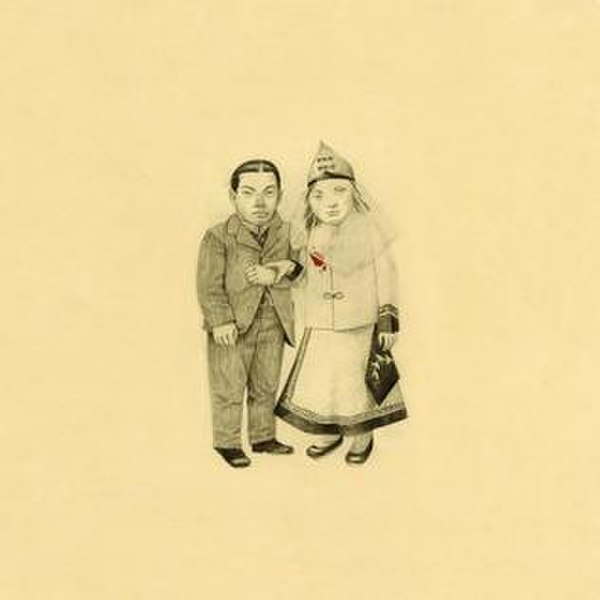
The Decemberists - The Crane Wife

Certain albums are classic. By that I mean they capture the essence of something that transcends music, so much so that the music becomes more than music; it becomes part of our very lives. These albums have an elevated sense of artistry, but also capture a moment in time and make it timeless. Nevermind was such an album. So were The Joshua Tree, Revolver, The Downward Spiral, Rumours, and Mellon Collie & the Infinite Sadness. Albums like that mark the time because they contain a kind of zeitgeist that endures the passing of the ages. The Crane Wife may just be another one of those albums.

The buzz surrounding The Crane Wife’s release was considerable, most of it being concern about the Decemberists moving to a major label. For three albums and four years, they had been the champions of the indie movement, being the crowning achievement and the most quality export of any minor label. But the natural progression is a band making a name for itself in indie land, and then climbing up the ladder to a major label, meaning more exposure and money. The problem is once an act makes the transition from small to big time, that major label forces them into the mold of public acceptance, something indie labels don’t do. So concern was voiced everywhere that that classic story would be the Decemberists’ story, too. Thankfully, everyone was wrong.

The Crane Wife is a glimpse of the Decemberists and frontman Colin Meloy at their most creative, their most ambitious, and their best. Right off the bat, this album captures a beauty not found in this day and age. With the 4-part epic “The Island,” they call upon the gods of progressive rock, like Pink Floyd, Yes, Genesis, Kansas, and even Jethro Tull. Even if they’re shamelessly indulging in the past, the lyrics still retain that Meloy-ness to them, something no one can duplicate. “Yankee Bayonet” has a guest spot from Laura Veirs, whom I had never heard of before. From the first second she came in, my ears pricked up. She has an incredibly unique voice, and it suits this song perfectly. “Shankill Butchers” is a bedside horror story, meant to scare kids into good behavior. “Don’t be naughty, children, or the Shankill Butchers will get ya!” The fact that a song like this exists at all is cause for celebration. “The Crane Wife 1 & 2,” along with its out-of-order companion piece “The Crane Wife 3,” draws upon an old Japanese folk tale of an act of kindness, giving the album a definition and sense of purpose that makes the strongest case for it being a classic album. And of course, the best is saved for last. “Sons and Daughters” brings it back to a place of beauty and timelessness. The final repeated phrase of “Here all the bombs fade away” is powerful but gentle at the same time. And the cymbal crashes and then the fade-out at the end only further illustrate the point.

I don’t know any other way to put it; this is the best album to come around in quite a long time. There isn’t a bad song on here, or even a ho-hum one. Each song is a splendid creation, but the album taken as a whole is really where it shines. It seriously could be one of those albums that fledgling bands hold up and say, “man, I wish we could be as good as that.” And it renews my faith in not just rock and roll, but music in general. When I listen to this album, I get the sense that it’s all going to be alright.

Prime Cuts:
Sons and Daughters
The Island
The Crane Wife 3
Shankill Butchers

22 Rating: 20

Wednesday, September 13, 2006

Panic! at the Disco - A Fever You Can't Sweat Out

You know, Panic! at the Disco’s A Fever You Can’t Sweat Out has made me realize something: I’m not a teenager anymore. This is not a shocking revelation to me, and now I’m thinking that it’s not such a bad thing. If this is where teenagers are at now, then I gladly leave those days behind me. Panic! at the Disco may be all the rage these days, but it really makes we wonder what they’re teaching in those schools of theirs.

The band pulls off a pretty good magic act, though. They make you think they’re saying something deep, and maybe even believe that they are. But they’re basically just a bunch of snot-nosed conceited kids who haven’t thought about the fact that they might actually be wrong yet. That’s what teenagers do, though, so it’s not surprising considering that Panic! at the Disco’s members are barely out of high school. For the most part, they are singing about things that seem really important to teens, and even to some adults. But their discourse about them reveals that they don’t have a freaking clue what they’re talking about. That’s not terribly surprising either.

It’s obvious that their influences are Nirvana, the Offspring, The Beatles, and the Chemical Brothers. For all the good history they take into consideration, they have learned none of those groups’ melodicism. This album has as many hooks as a bowling ball, a very bad thing for a punk band. The way they make their songs stick in your mind is through repetition and violently hammering them into your brain, since they’re fully aware that the riffs are unremarkable on their own. The tendency these days towards very long sentence-like song titles (Fall Out Boy is guilty of it as well) is supposed to be snarky, but instead is annoying. The incredible self-awareness of the lyrics makes me shake my head. This is a band that sings about being in a band to the point of wanting to tell them to shut the hell up.

“London Beckoned Songs About Money Written By Machines” is very strong evidence that Panic! at the Disco came out of the womb being too big for its conceited britches. “Time to Dance” is the closest thing to a smooth groove, but it’s marred by the lyrics’ clumsy melody. “But It’s Better If You Do” portrays the world of cheap strip clubs pretty skillfully, but I can’t get away from the fact that the kids in Panic! at the Disco must be talking out of their collective ass, since none of them could have possibly ever been in a strip club. I appreciate the skewering of the fashion industry in “There’s a Good Reason These Tables are Numbered Honey You Just Haven’t Thought of It Yet,” but it has a song title that is too freaking long!!!! And on “Build God, Then We’ll Talk” they resort to ripping off The Sound of Music. Very classy.

What’s sad is that Panic! at the Disco probably think they’re the greatest thing since sliced bread. What’s even sadder is that the general public does too.

Prime Cuts:
Time to Dance

22 Rating: -12

Tuesday, August 29, 2006

Live - Songs from Black Mountain

By nature, I am a person who resists change. I’m really trying to work on this, and I think I’ve come a long way. Still, to hear an album like Live’s seventh effort Songs from Black Mountain makes me sad. It’s because when I was in high school, bands like Live were the tip-top. Now, ten years later, they’ve all either broken up or gone through some change, and my instinctual reaction is one of distress. Live may have matured in their growth, but part of me thinks they’ve gone a little soft.

Ed Kowalczyk and his crew can be considered the spiritual gurus of rock and roll. Groups like Creed can pretend, but Live’s spirituality goes a lot deeper than a few camera-ready Christ poses. They walk the wandering walk, instead of just talking the Jesus-like talk. The journey Ed Kowalczyk has taken in his lyrics and the place he has come to is fascinating to me, and does at least a little to help me form my connection to God and the spiritual world. But now, I fear the journey is nearing its end, as Ed seems to be getting more and more satisfied with each Live album. That’s great for Ed, but not so great for me. It’s good to be spiritually satisfied, but more often than not it makes for some pretty boring music.

But I’m being unfair to this album; despite some rather vapid spiritual revelations, it is pretty good. It’s just not of the caliber I’ve come to expect from Live. They’re one of my very favorite groups, so it’s a little disappointing to get an album from them that’s just okay. The problem is that when I wasn’t looking, they went and grew up. I could sense it a little on Birds of Pray. But that album still had enough bombast to make it appealing to my young eyes. That album worked because it combined high-energy anthem rock with deep philosophical statements. With Songs from Black Mountain, the deep ruminations are fully intact, but the rock part seems very damaged.

The song “Get Ready” is a perfect example. This has the potential to be a loud, triumphant Live-style anthem, but as it is, it seems neutered and stale. They’ve mellowed in their old age, and they’re still really good. But I miss the version of Ed Kowalczyk that drove to the hoop every night, that offered himself up as a living sacrifice to the gods of rock and roll. This newer, calmer version who’s a parent two times over is nice, but it makes me yearn for the past.

Unlike other Live albums, there are no really great songs, but instead a bunch of pretty good ones. It’s hard to tell them apart from each other, actually. “The River” is the first single, and it sets the tone for the rest of the record, with little deviation. “Love Shines” is basically a Sunday school lesson, but quite often the most meaningful statements are couched in pretty simple things. And “Sofia” is a good tribute to a woman we would all like to marry. Like I said, the album is good, even if there are no surprises. While from lots of other bands that’s pretty good, Live are held to a greater standard, and it’s sad to see them falling just barely short of it.

Prime Cuts:
Mystery
Sofia

Love Shines (A Song for My Daughters about God)

22 Rating: 7

Saturday, August 19, 2006

Thom Yorke - The Eraser

Thom Yorke (much to his own chagrin, I’m sure) is a rock star. He’s been elevated to a level where millions of people admire him, and any weirdness he veers off into, his fans will embrace, if a little hesitantly. He probably doesn’t destroy hotel rooms or sleep with hundreds of groupies, but his originality and categorical distinctness are what make him so interesting. He makes music that forces people to sit up and listen or get left behind. I’m sorry, Thom, but that’s a rock star. You’re a rock star; get over it.

Separating himself from most of Radiohead for one album has done a few things for Yorke. One, he’s not as concerned with melody or consistency. Two, he’s a lot less reliant on guitars and is exploring the soundscapes seen on Kid A. The Eraser is a lot like Kid A, but more optimistic (ironic, considering Kid A contains a song called “Optimistic” that is anything but). He may be doing his own thing, to the exclusion of anything else, but his fans are going along with it. I think Radiohead fans like to be confused; that’s sort of the natural state for them. With a lot of pop acts, we like them at first, but the taste of them eventually sours over time. With Radiohead and Thom Yorke, we have the opposite. While The Eraser may seem incomprehensible and space-cadet at first, give it time. One lesson I’ve learned from my years of interaction with Radiohead’s music is that it needs time to grow on you. That’s true of Thom Yorke’s solo work, as well.

The title track begins the album, and it tells you instantly that this will be a difficult listen. A distorted piano playing a hard-to-follow rhythm continues throughout the whole thing, with a few key changes, just in case you weren’t confused enough already. But the genius of this song is that when examined closely, it’s actually in 4/4 time with a chorus. “Analyse” has a wicked cool groove to it, and is primarily beat driven. The music suggests that it is all about to unravel, and that things may actually be better once it does. In “The Clock,” Thom does that doomy/lilting thing that only he can do, marrying a sense of impending danger to a very soft and malleable melody. “Black Swan,” probably the album’s most single-worthy song, has a great sing-along chorus, or at least hum-along. The entire Eraser album seems like a logical extension of Hail to the Thief, with many of the songs seeming similar to the “I will eat you alive” and “You have not been paying attention” vibe. How strange that The Eraser can very logically follow both Kid A and Hail to the Thief, when those two albums aren’t very similar at all.

Many songs have guitar, but they just provide subtle touches instead of being the main feature of a song, like on The Bends and some of OK Computer. I actually think most of the songs were written on a drum machine; almost the entire album has a very strong beat, if a somewhat discombobulating one. Thom Yorke doesn’t deal in pop sensibilities or mainstream conventions. Amazingly, his popularity only seems to be growing, as is the respect that the music community has for him. What can I say? He’s a rock star.

Prime Cuts:
Analyse
Black Swan
And It Rained All Night
The Clock

22 Rating: 9

Monday, August 07, 2006

Dream Theater - Octavarium

Dream Theater have never been ones to rest on their laurels. The last four years have seen three studio albums from these dynamos, and they haven’t been just throw-away efforts, toss-offs with no distinction one from the other. Each has been a unique entity, a little different from the others. They’re probably the most famous of all the progressive rock acts of all time. Though that’s not saying much for their number of fans, the fans that they do have are quite a sight to behold. I can say from experience that you don’t just have a passing interest in Dream Theater. At times it’s stronger than at others, but you really have to fall into one of two camps: you either are wowed by them, or you don’t get it.

Octavarium is Dream Theater’s eighth full-length album, and they sound every bit as alive, excited, and mind-bogglingly proficient as ever. At the same time, Octavarium seems a little stale. I don’t think Dream Theater is losing their touch so much as their touch is remaining the same. Yes, they’re masters at their instruments. Yes, they do progressive metal better than just about anybody. Yes, John Petrucci has skills with the guitar that should be reserved for heavenly beings. All this we know. They don’t seem to have gone through the progression that most bands do of playing only passingly in the beginning and then getting better as they grow, eventually reaching excellence. Dream Theater seem to have skipped the “only passingly” part all together, and gone straight to excellence.

Even so, Octavarium has changes in other ways, as their previous albums do. The blackness and anger of Train of Thought is left behind, and it’s replaced by a more even-handed approach. “The Root of All Evil” picks up where Train of Thought left off, making the transition from one musical mode to the next. “The Answer Lies Within” is a little boring and simple-minded, but boring Dream Theater is way better than inspired Nickelback. Then there’s “I Walk Beside You.” This is a pretty odd song for Dream Theater. It’s quick, driving, upbeat, and even radio-friendly. GASP!!! You heard right.

Dream Theater must have thought they had to compensate for their moment of pop, so they did just that. Almost the entire second half of the record is taken up by only two songs; the 10 minute “Sacrificed Sons,” and the 24-minute epic title track. Dream Theater seems to have grown a social conscious, having one song on their last three albums explicitly about an issue facing our contemporary world. This time it’s “Sacrificed Sons,” the subject being 9/11. As far as number of tracks go, this is a very brief album, being only 8 tracks long. However, it’s 75 minutes long, which is almost all that a single CD can hold. Honestly, this is a lot like the classic albums from the 1970s, generally known as the heydays of progressive rock. The final title track, also, contains a section where Dream Theater pulls influence from every progressive source imaginable, from Genesis, Led Zeppelin, Yes, Pink Floyd, Black Sabbath, and Deep Purple, just to name a few. And this isn’t just my own interpretation; anybody with knowledge of those groups would be able to pick up on it.

Octavarium proves that Dream Theater are not going soft in their old age. They can’t get any sharper, because they’ve already hit the ceiling on that, but they aren’t losing even a miniscule amount of their edge. However, it can’t be too long till they start to… can it?

Prime Cuts:
Octavarium
I Walk Beside You
The Root of All Evil

22 Rating: 13