Wednesday, May 24, 2006

Arcade Fire - Funeral

Probably the most “different” band I’m into is the Decemberists. They’re pretty much unlike anything else I’m really into, but I love them in a big way. So I was searching allmusic.com for bands similar to the Decemberists, and figured I’d try a few. The first one I tried was Belle & Sebastian, and I didn’t like them at all. At first I thought my love of the Decemberists was just a fluke, but I decided to give it one more go, and tried listening to Arcade Fire. There, I struck gold.

What makes Arcade Fire so good is their passion. They’re not good-looking, appealing, or well-noted, and they don’t even play their instruments extremely well. Win Butler arguably doesn’t have a very good voice. I get the feeling that he could have a good voice if he took lessons, but as it is, it is very raw and untrained. No, none of those things apply, but they play with such abandon, like their very lives depended on the next note. That’s not to say every musical moment is intense and loud; sometimes quite the opposite. But even the quiet, contemplative moments communicate great importance. It’s as if they are saying, “this life is all we have, so we’re going to say what needs to be said.” Their music works because they believe in it 100%, at the cost of everything else.

That attitude is put forth very strongly, both lyrically and musically, with the first track, “Tunnels.” It builds gradually, as a lot of their songs do, starting out in subtle gentleness, eventually reaching such heights of urgency that you would wonder if it’s actually the same song, if the melody weren’t consistent. The next track, “Laika,” has an awesome accordion part (never thought I’d say that…), and a percussion part that is insistent, and drives the song. Much of their music is beat-driven, and I’m struck by how strong their rhythm section is. “Power Out,” the album’s crowning achievement, is an anthem, a call to arms, a one-song revolution. The power is out/in the heart of man/take it from your heart/put it in your hand. Man, that makes me want to go out and change the world. How about you?

Perhaps what makes this band so urgent and now-centered is the tragedies that befell them at the beginning of the recording of this album. Three band members had close family members die in a short period of time, inspiring the album’s title, and the music reflects that. That is not to say it’s dark or depressing; quite the opposite, actually. At its best, the music is warm, life-affirming, even beautiful. And even at its worst, it’s just saccharine and a little boring, not cringe-inducing or laughable like some other bands of the same emotional color. This is music with a heart, and the experience is softly empathic, like a lover sleeping next to you. Arcade Fire doesn't take their cues from rock and roll, or any mainstream music for that matter, but somehow they still come to a place that is universal. It may take a while to grow on you, and you really have to be a little open for it to work for you, but Funeral is a very rewarding album, and I think you’ll find yourself, like I do, returning to it again and again.

Prime Cuts:
Power Out
Laika
Rebellion (Lies)
Tunnels

22 Rating: 13

Monday, May 15, 2006

Death Cab for Cutie - Transatlanticism

I’m really kind of torn. On one hand, I want to praise Death Cab for Cutie for being passionate and driven while still being even-handed. They don’t over-sell their message (whatever that is), and instead come at you from the back, slowly sidling up to you so you wonder if they weren’t there all along. So many bands, especially young indie bands like Death Cab, tend to be so attention-grasping that it’s a turn-off. On the other hand, I KNOW that they can be a really bombastic, really anthemic, really good rock and roll band. I just know it. Somewhere under Ben Gibbard’s melancholic exterior is a blazing rock star just aching to get out. But my fear is probably the same as his: what will happen if he releases him?

In 2003, Death Cab for Cutie was comfortably settled in indie land, making underground music that people were crazy about. As they slowly became more mainstream, both in popularity and style, they didn’t lose that thrown-together feel that all indie bands wear like a badge of honor. Transatlanticism, their fourth album, is probably the most mainstream of their indie albums, and it’s also their last before they became media darlings and everybody knew their name. And it’s also their best. We Have the Facts and We’re Voting Yes was a massive leap forward for them, as they perfected the live-in-the-studio feel, but it wasn’t ambitious enough. The Photo Album was a bit louder and made a bolder statement, but there was not a hook to be found anywhere in a 700-mile radius. With Transatlanticism, they finally hit just the right note.

The opener, “The New Year,” is their most ambitious number to date, with a huge sound contrasted against Gibbard’s willowy voice. It’s ridiculously anthemic, and it’s not even the most anthemic song on the album. Its lyrics set a tone that continues through the entire proceedings. “Title and Registration” has even more of that think-really-hard aspect to the lyrics, and is beautifully understated. The drum machine’s relentless beat gives it a mechanical feel, at the same time that the guitar and bells inject humanness. “The Sound of Settling” is driving and surprisingly poppy. The ba-ba chorus makes me think “this is an indie band that actually wants to be mass-market.” And then there’s the title track, which I didn’t like the first time I heard it. It might have been because my mind was occupied with other things, and I didn’t have enough attention to catch the subtle nuances and incredibly slow build. This is an exercise in the most amazing kind of restraint, and is something that every band could learn from. Instead of hurrying, it takes the time to enjoy itself, and its lush and rich textures have the space to really stretch out. “Transatlanticism” will surely be a live favorite, with lighters lit all around the arena. Amazingly, however, that song is in the middle of the album, so it’s not done. “We Looked Like Giants” is the hardest rocking song they’ve done yet, but the hard rock quality of it is not what you’d expect. This is where I suspect the most that there is a rock star hidden under Ben Gibbard’s submissive demeanor. It’s doomy like a metal band, but gentle and tender at the same exact time. And “A Lack of Color” closes the album, making us itch uncontrollably for the next album. It’s too bad Plans made a lot of the wrong choices, favoring schmaltze over substance.

When it’s over, Transatlanticism is a very satisfying experience. It’s strange, then, that the album taken as a whole doesn’t add up to much. Death Cab for Cutie are just so understated that they often come across as saying nothing at all. They make their listeners work very hard to get any satisfaction out of their music. While that’s admirable, it forces their constituency to be relatively small. Even though they’re in the mainstream now, I don’t think they’ll stay there for very long. At their heart, they’re an indie band, and indie by definition is not mainstream.

Prime Cuts:
Title and Registration
Transatlanticism
A Lack of Color
We Looked Like Giants

22 Rating: 10

Monday, May 08, 2006

Foo Fighters - In Your Honor

Back in 1994, Billy Corgan of the Smashing Pumpkins said that the idea behind the Smashing Pumpkins was “loud music and quite music and putting it all together.” Well, the idea behind the Foo Fighters’ In Your Honor seems to be loud music and quiet music and keeping them completely separate. After hearing the whole thing, I can say it was very very VERY bad idea to separate them, simply because it makes for an achingly uninteresting listening experience. The reason for that isn’t just the separation of the two styles. That in and of itself is fine, I guess. The trouble with In Your Honor is that the two styles could have been represented with just 2 songs as well as they are in 20. As expansive as this album seems, it really only strikes two notes. It’s a retard in a genius’ clothing.

At the start, it’s promising enough. The song “In Your Honor” doesn’t really offer much, but it suggests very good things to come. Then, for the next 9 tracks, it’s just heaviness and more heaviness. Dave Grohl has a pretty good voice, but when he gets up to a certain register, he really strains his voice so it just sounds like a scream. That’s okay, except that he spends most of the first disc in that register. The loud half just seems clumsy where is should be passionate, and it doesn’t seem that a lot of thought or effort was put into it.

The quiet half has the same exact problem, though not in the specifics. The opening track, “Still,” has a very doomy and sinister feel to it, again making us hopeful for what lies ahead. We were disappointed before, however, so it shouldn’t be a surprise that we are again. The subdued flavor of the second disc is nicer than the confused mess of the first, but it quickly gets old. A lot of the loud songs seem like they could have had quiet versions, and vise versa, and we would not have known the difference.

What I said earlier about the album only striking two notes was not quite true. There are a few touches of brilliance here and there, but they’re hidden among the mess of the rest. “Resolve” is a great number, and the one place where they loud/quiet thing really comes together. “Virginia Moon” has an interesting Brazilian cafĂ©, Girl From Ipanema thing going on, probably injected by the Norah Jones guest spot and her influence. And the closing song, “Razor,” reminds me of “The Gymnast, High Above the Ground,” with its syncopated acoustic guitar work. So there are a few flashes of something really interesting, but then they’re gone and we’re back to the mess. The intriguing moments are not nearly frequent enough on a double album. Dave Grohl had a pretty good idea that broke down the second he tried to put into practice. I can appreciate the spirit of experimentation, but a veteran like him should have known when to pull the plug.

Prime Cuts:
Resolve
Virginia Moon

22 Rating: -4

Wednesday, May 03, 2006

Korn - Follow the Leader

I must admit, I didn’t hold out a lot of hope for Follow the Leader. I don’t really like rap-core, as it tends to be heaviness without class or substance, and vulgarity without purpose. Thusly, an album that I understand to be as influential to rap-core as Follow the Leader is does not inspire feelings of anticipated greatness in me. For a large part, I’m right. But Follow the Leader does have more appeal and subtlety than pretty much every other album in this genre, though that is not saying a lot.

Korn are masters of one thing: sound. They write adequate songs, play their instruments passingly well, and John Davis has an impressive repertoire of voices, if you like that sort of thing. But where they really excel is in finding new an interesting ways to create sounds, sometimes sounds that you would not expect to hear in music. As I understand it, all the sounds come from the musical instruments of the band, and nothing more, which makes it even more impressive. Like Jimi Hendrix before them, they are pushing the limits of what a guitar can do and what it can sound like, though admittedly not as far or as hard as Jimi did.

Korn has progressed beyond the incredibly laborious ground that they covered in their first two albums. The utter darkness of child abuse and the damaging effects of pornography are weighty subjects, such that the weight becomes unbearable if they’re presented as explicitly and as often as Korn did. Thankfully, they are exploring themes of loss of self (“Seed,” “Freak On a Leash”), passive-aggressive-ness (“It’s On!), and parental expectations (“Dead Bodies Everywhere”) on Follow the Leader. The grinding crunch of their guitar work goes right to the gut, and Jonathan Davis sings with passion and urgency (though not grace or fluidity). He says a lot of bad words (and I mean a lot), but he mostly uses them in their appropriate context, and they usually illustrate his point. And the overall sound creates such a specific atmosphere, and that’s something that most bands simply can’t do.

Okay, I’ve spent the last two paragraphs highlighting Korn’s best points, so the album is probably great, right? Well, not really. For all their good attributes, Korn sabotage themselves by being a part of a movement that is one of the worst things to happen to music in the past 20 years (trumped only by disco). Rap-core is the domain of teenage boys who are frustrated by their parents, want to have sex but can’t, constantly misplace their anger, and know too many euphemisms for the male genitalia. Linkin Park excepted, all rap-core groups feed into and affirm that thinking, and Korn are no exception. Ice Cube’s guest appearance on “Children of the Korn” gets the prize for the most unnecessarily vulgar and needlessly disgusting moment on the album. And then Korn dissolves into a gross-out and insult competition between John Davis and Limp Bizkit’s Fred Durst on “All In the Family.” This combined with the fact that the album runs out of steam near the end make me not really able to recommend it. I can, however, respect what it tries to do, and admire its adherence to an idea, even if I find that idea to not be a particularly good one.

Prime Cuts:
Freak On a Leash
It’s On!
Justin

22 Rating: -2

Sunday, April 23, 2006

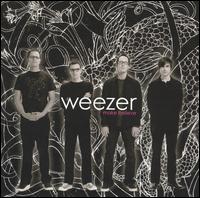
Weezer - Make Believe

Weezer’s a pretty odd duck, especially Rivers Cuomo himself. He defies all the conventions of rock and roll stardom, both in appearance and attitude. He makes serious rock music that anyone can embrace, but he also represents a demographic that mostly goes unnoticed. The geeky, awkward, frail and painfully shy guys who get the sand kicked in their face at the beach, and retreat to their bedrooms to play death rock and fantasize about the head cheerleader.

Weezer’s fifth album, Make Believe, is a synthesis of the two sounds and attitudes they have taken in the past. On the one hand, it’s very pop-oriented and catchy, and even a little happy. On the other hand, its emotional blood-letting and gushing sentimentality are enough to rival any emo band. Pinkerton had that going on, but the music was angry, visceral and gutsy, whereas Make Believe is mostly positive. I’m not sure how much I like this new flower-sniffing, I-have-erectile-dysfunction-but-I’m-still-smiling Rivers, but I guess it’s a little better than the bitter, misogynistic variety. What made Pinkerton so great, despite its over-arching maleness, was its honesty. Make Believe seems just a little bit too contrived, and I don’t think I buy it.

Rivers has definitely matured as a lyricist since The Blue Album, as his lyrics have a bit more eloquence to them than usual. Also, his guitar skill seems to have grown in leaps and bounds. The Green Album had me seriously worried, as all the guitar solos mirrored exactly the melodies sung in the verses. Maladroit assuaged that fear, but the songs weren’t very good, with a few exceptions. In truth, Make Believe isn’t a whole lot better, but there’s an honesty that was missing from the previous two albums, and a willingness to work through the problems rather than hiding behind big guitars. The problem is that he can’t seem to make up his mind between saying “I’ve got problems” and “I’ve got the solutions.” All the songs paint either a very grim picture, or a sickeningly cheerful one.

Beverly Hills” starts off with a wicked good beat, and has a sense of fun that is pretty rare in this day and age. Weezer can always be counted on to provide a healthy dash of fun. The best example is the video for “Keep Fishin’,” which resurrected the Muppets from the dusty vault of TV history, and reminded us all that rock and roll can and should make you laugh. That fun drops off after the first track, but thankfully it’s replaced by eloquence and even-handedness. The gentle flow of emotions quickly becomes a rushing river, however, and by “Peace,” you’re wishing you had a life preserver. A good example of the sweetness making your teeth ache would be “My Best Friend,” which has a great sound to it, but the lyrics simply stab it dead. Its sappy sentimentality kills any chance of it rocking us, and we just end up wondering if Rivers has gone completely soft. Does Rivers really expect us to believe that he’s NOT a tortured soul when he just spent 7 of the last 8 tracks convincing us he was?

Rivers Cuomo is very smart, and he walks a fine line between sugary pop and grinding heavy metal. Sometimes he slips up, but experience serves him well. I just wish he would let down all the walls, and make an album that really told us how he felt. As it stands, though, Make Believe comes closest to the mark.


Prime Cuts:
Beverly Hills
This is Such a Pity
Perfect Situation

22 Rating: 8

Tuesday, April 11, 2006

Evanescence - Fallen

At last, a breath of fresh air in the dismal world of goth rock. No one did, but I guess someone should have figured that the solution to making goth rock fresh and new again was to have someone of a different gender sing it. Amy Lee simply glows with appeal and earnestness on Evanescence’s debut album. What’s great about it is that it is tuneful and passionate as well as dark. What’s very important, as well, is that the darkness is not all-pervading and total. Amidst the stormy and shattered world of goth, there is hope for salvation. It is this that sets Fallen apart.

It’s also different in the fact that it’s very melodic and singable, something that a lot of other goth rock albums aren’t (that's right, I'm talking to you, My Chemical Romance). That is due mainly to Amy Lee’s voice, which is velvety and rich, like grape ice cream. That’s very different from the often abrasive and grating voices that this genre usually embraces. Evanescence takes a different tack than their contemporaries, beckoning you forward instead of dragging you along.

People have said that they are a pop band in goth clothing, that they’re just posers with a good marketing strategy. Honestly, if they are just selling something, I’d want to buy it anyway, so what does it matter? The prevalence of piano and the fact that they don’t rely on grinding guitars has made some people suggest that they’re somewhat less than a real rock band. That’s completely unfounded, in my opinion. Tori Amos with a harder edge? Maybe, but I would be more apt to think Black Sabbath with a sultry female voice.

I’m looking through it, and there isn’t a bad song on here. Each one keeps in mind that tunefulness and catchiness are just as important as emotion and forthrightness. That being said, the best are “Everybody’s Fool” and “Haunted.” The former starts off with a simply beautiful acoustic guitar, and paints a very intimate portrait of someone who is beautiful on the outside and ugly within. The latter has that Edgar Allen Poe phantasmagoria feel down perfectly, and Lee’s voice combined with the heavy guitar work spectacularly together.

What makes Fallen unique and great is the splendid combination of the soft with the abrasive. We’re getting very heavy music delivered on the back of a gorgeous voice, so gorgeous that we sometimes forget how heavy it is. I really think Amy Lee is one of the best singers of the last 10 years, not because she is particularly talented, but because she is able to create an atmosphere with her voice. Her delivery and presentation is honest and true, but not in the way that makes you squirm in your seat. Other female artists have done that to me, made me want to leave the room. Amy Lee makes me want to give her a hug. How very odd that a goth band would elicit that type of reaction from me.

Prime Cuts:
Haunted
Everybody’s Fool
Bring Me to Life
Whisper

22 Rating: 16

Saturday, April 01, 2006

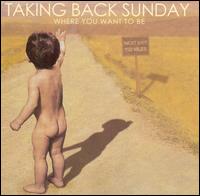
Taking Back Sunday - Where You Want to Be


Ah, emo. What started as a club thing spiraled out of control until it burst through the walls of the box it was in. Oddly enough, with the walls down, it stayed in the box; it just wanted the view. Foundational bands like Jimmy Eat World, the Promise Ring, and Dashboard Confessional had a good thing going, but only if you like that sort of thing. If you go to a rock show to mosh, get drunk, and be crazy, maybe the Offspring would be more your speed. However, if crying your eyes out sounds like a ripping good time, well then go to a Taking Back Sunday show.

The thing is, like all baby phenomenons that catch the attention of the mass market, emo has a very limited scope. Jimmy Eat World isn’t really emo anymore, and when was the last time anyone heard from the Promise Ring? But instead of letting it fade back into the mists of history like disco and grunge, bands like Taking Back Sunday still want to keep it alive. Let it go, guys, let it go.

Still, though, Where You Want to Be is a pretty good record. Well, “pretty good” is a very loose term. It’s good in the respect that all the requisite elements that rubber stamp it “emo” are in place, almost perfectly so. I have a strange sort of affection for emo bands, even though they are beating a horse that’s starting to disintegrate. They’re just so earnest in their belief that this is the best music in the world, and you gotta respect that.

When you take a closer look, though, Taking Back Sunday starts to disintegrate just like that horse. Didn’t anyone ever tell them that talking louder doesn’t necessarily make you heard better? Their earnestness is refreshing, but Taking Back Sunday seems way too eager. They’re so anxious to tell you… what? I haven’t quite figured out what their message is, and the more time that passes the more I think that I never will. That’s okay, though; a band doesn’t have to have a message. The screaming, even if it’s not particularly negative, gets old after a while, and so does the heavy-handedness. If Death Cab for Cutie and Taking Back Sunday were to have a child (and it had the best features of each, not the worst) it would be awesome, and I’d buy it’s CD. As it stands, though, Taking Back Sunday’s puppy-like excitement and forthrightness is cute, but that’s it. The territory they cover has been covered by Jimmy Eat World, and covered better. That band figured out that harmony and gentleness are NOT cardinal sins. Taking Back Sunday hasn’t learned that lesson yet, but they will. After all, they’re just an emo band; they're not fully grown yet.

Prime Cuts:
A Decade Under the Influence
I Am Fred Astaire
Little Devotional

22 Rating: 7